Disclosure: As an Amazon Associate I earn from qualifying purchases. How this site works
Spot Cleaner vs Upright Carpet Cleaner
Different jobs, different machines.
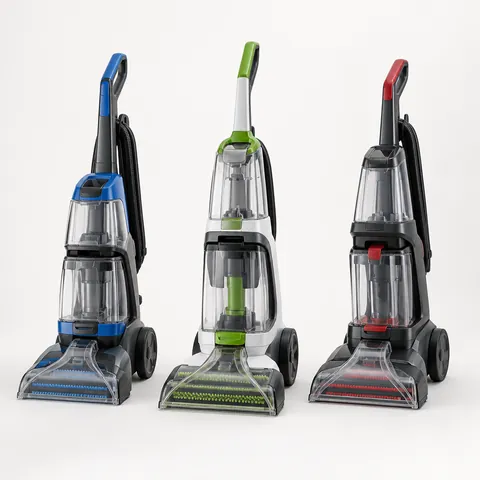 Upright carpet cleaners
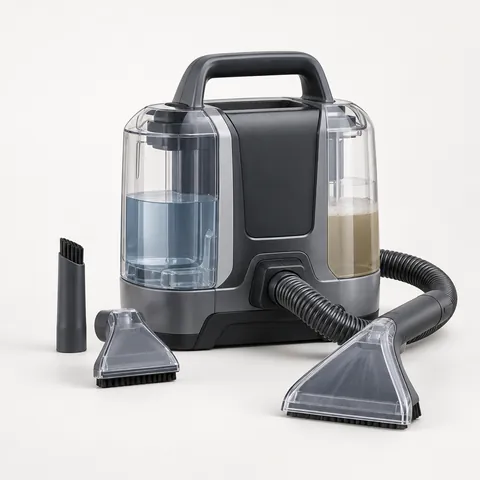 Portable spot cleaners
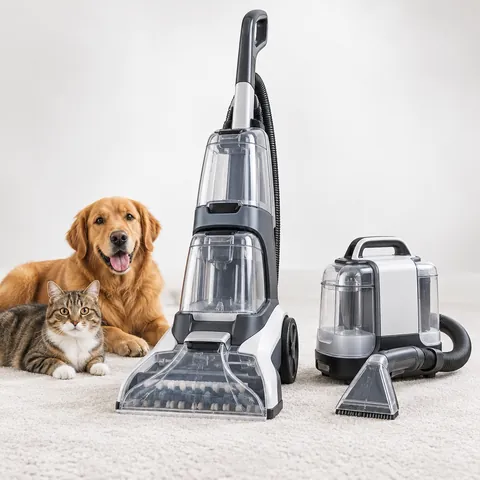 Pet carpet cleaners
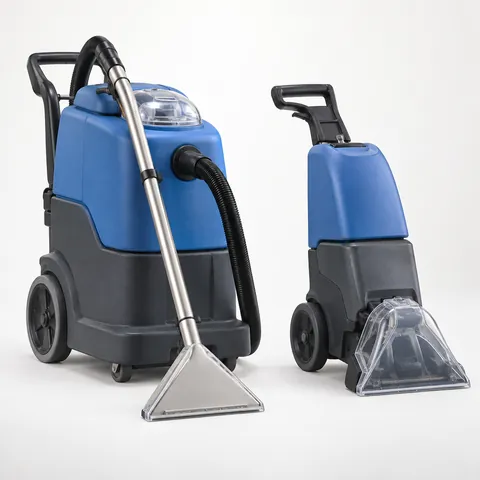 Commercial and rental carpet machines
Compared
| Spot cleaner | Upright | |
|---|---|---|
| Area | Spots, stairs, upholstery | Whole rooms |
| Storage | Small | Large |
| Weight | Light | Heavy when full |
| Tank size | Small | Larger |
Both?
Many pet owners keep a portable unit for accidents and rent an upright once or twice a year.
See portable spot cleaners and rental and commercial machines.
Which Is Better for Your Home: a Spot Cleaner or an Upright?
Choose by the kind of mess you expect most often, not by the biggest machine you can store. A spot cleaner is built for targeted cleanup: pet accidents, drink spills, muddy paw prints near a door, car mats, stairs, and fabric-covered furniture that can be wet-cleaned. An upright carpet cleaner is built for lanes, bedrooms, family rooms, and other broad carpeted areas where you want to wash evenly from wall to wall.
- Pick a spot cleaner if most messes are smaller than a dinner plate and you want something you can grab quickly.
- Pick an upright if the carpet looks dull across a room, has traffic paths, or needs a seasonal deep clean.
- Pick a spot cleaner for stairs if lifting a full-size machine up steps would be awkward or unsafe.
- Pick an upright if you need more consistent water extraction across a large area.
- Consider both only if you have frequent small accidents and also maintain several carpeted rooms.
A portable unit is easier to carry and store, but it takes patience on large areas because the cleaning path is small and the dirty-water tank fills sooner. An upright covers more carpet per pass, but it takes more setup, more sink trips, and more drying planning. If you live in a small apartment with one rug and a couch, start with portable spot cleaners. If you have multiple carpeted rooms, compare upright carpet cleaners instead.
How Do Cleaning Results Differ?
Both machine types spray cleaning liquid, agitate the fibers, and extract dirty water. The difference is scale and control. A spot cleaner lets you concentrate on one stain and control the hose angle, which helps on corners, stair treads, upholstery seams, and car interiors. An upright usually gives more even coverage because the brush and suction path stay at a consistent height while you push the machine.
For old stains, neither type can promise full removal. Heat, dye, bleach, pet urine, and set-in soil can permanently change carpet fibers or backing. The practical goal is to remove as much residue as possible without overwetting the carpet. Slow extraction passes matter more than repeated spraying. If the carpet stays wet for too long, odor and wicking can become a bigger problem than the original spill.
| Job | Better fit | Why |
|---|---|---|
| Fresh food or drink spill | Spot cleaner | Fast setup and direct suction over the spill |
| Whole bedroom or hallway | Upright | Wider path and larger tanks reduce stop-and-start work |
| Stairs | Spot cleaner | Hose tool is easier to control on narrow steps |
| Carpet traffic lanes | Upright | More even passes over long, worn-looking areas |
| Couch cushion or car seat | Spot cleaner | Hand tool works better on fabric surfaces and tight areas |
| Move-out cleaning | Upright or rental | Large area coverage is usually more important than portability |
Always check the carpet or fabric care label before using water and cleaning solution. Some rugs, wool carpet, sisal, jute, silk, and certain upholstery fabrics need special care. When in doubt, test a hidden area and let it dry before cleaning a visible section.
What Features Matter When Comparing Machines?
The best feature set depends on how you will actually use the machine. A large tank sounds convenient, but it also adds weight when full. A long hose helps on stairs and car interiors, but it needs a place to wrap or store without kinking. Strong suction helps remove moisture, but good technique still matters.
- Tank design: Look for separate clean-water and dirty-water tanks that are easy to remove, fill, empty, and rinse.
- Brush access: Removable brush covers and nozzles make it easier to clear hair, lint, and carpet fuzz.
- Hose length: For a spot cleaner, make sure the hose can reach the middle of your staircase or vehicle seat without pulling the unit over.
- Cord length: A longer cord reduces outlet changes, especially with an upright, but it also needs tidy storage.
- Tool selection: A small stain tool is useful for tight spots; a wider tool is better for cushions and stair treads.
- Weight when full: Check not just the empty weight but whether you can carry or tip the machine safely with water in it.
- Storage footprint: Measure the closet or laundry area before buying, including space for hose, cord, and tools to dry.
- Cleaning solution compatibility: Use the type of solution recommended for the machine, and avoid mixing products.
Pet homes may need tools that can handle hair and accidents without clogging quickly. A pet-focused model is not automatically stronger, but it may include a tool shape or tank setup that is easier to clean after messes. If that is your main use case, compare pet-focused carpet cleaner models and pay close attention to how the dirty parts come apart for rinsing.
How Should You Use Each Type Without Overwetting Carpet?
Overwetting is one of the most common mistakes with any carpet cleaner. More liquid does not always mean cleaner carpet. The machine needs time to pull moisture and soil back out. Plan the job when you can keep people and pets off the cleaned area until it is dry.
- Vacuum first. Remove dry dirt, hair, crumbs, and grit before adding moisture.
- Pretreat only where needed. Give the cleaner a short dwell time if the product label allows it, but do not let it dry on the carpet.
- Use controlled wet passes. Spray on the forward or backward pass according to the machine instructions instead of soaking one area repeatedly.
- Make extra dry passes. Move slowly with suction on and no spray to remove as much water as possible.
- Empty dirty water before it reaches the limit line. A full tank can reduce extraction and may leak on some designs.
- Rinse if needed. If the carpet feels sticky after cleaning, a plain-water pass may help remove leftover detergent, if your machine instructions allow it.
- Speed drying. Increase airflow with fans, open interior doors, and avoid replacing furniture until the carpet is dry.
For a spot cleaner, work from the outside of a stain toward the center so the stain does not spread. Blot thick spills first with a towel; do not grind them deeper into the fibers. For an upright, overlap passes slightly and clean in straight lines so you do not miss strips. Avoid repeated soaking at doorways and room edges, where airflow may be limited.
Should You Buy, Rent, or Hire a Professional?
Buying makes sense when you will use the machine often enough to justify storing and maintaining it. Renting can make sense for occasional whole-room cleaning, especially if you do not want a bulky upright in the house. Hiring a professional may be the better call for delicate rugs, widespread pet odor, flood-related moisture, or carpet covered by a warranty with specific cleaning requirements.
A portable spot cleaner is the easiest type to justify for frequent small messes because it is ready between bigger cleanings. An upright is more of a maintenance tool for carpeted homes. A rental or commercial-style machine may offer a larger tank and heavier build, but it can be harder to transport, lift, rinse, and dry after use.
Also consider the cost of cleaning solution, replacement parts, and your time. Machines with hard-to-clean tanks or nonremovable nozzles are more likely to sit unused because cleanup feels like a chore. Before buying, read the manual or product page closely enough to know how the dirty tank, brush area, and hose are cleaned after each use.
Frequently asked questions
Can a spot cleaner clean an entire room?
It can, but it is usually the wrong tool for the job. The small tool path and tank size make whole-room cleaning slow, and it is harder to keep the finished area evenly cleaned. Use a spot cleaner for stains and small zones, and use an upright or rental for full rooms.
Do upright carpet cleaners remove pet urine odor?
They can help remove residue from the carpet fibers, but odor can remain if urine reached the pad or subfloor. Use an appropriate pet stain cleaning solution and extract slowly instead of soaking the area. Severe or repeated accidents may need professional treatment.
Can I use carpet cleaning solution in both machine types?
Use only a solution that is compatible with your machine and the surface you are cleaning. Do not use laundry detergent, dish soap, bleach, or random household cleaners in the tank. Too much foam or residue can reduce extraction and leave carpet sticky.
How long does carpet take to dry after using a cleaner?
Drying time depends on carpet thickness, how much liquid you used, room airflow, humidity, and how many dry passes you made. Thin carpet cleaned lightly may dry much faster than dense carpet that was heavily sprayed. Keep air moving and avoid walking on the carpet until it feels dry.
Is a spot cleaner good for upholstery?
A spot cleaner can be useful on many fabric chairs, sofas, and car seats, but only if the fabric can be wet-cleaned. Check the care tag and test a hidden area first. Avoid soaking cushions because moisture can settle deep in the padding and take a long time to dry.
Disclosure: As an Amazon Associate I earn from qualifying purchases. This site may earn a commission when you buy through its links, at no extra cost to you. Product details come from public manufacturer information; always check the merchant page for current specifications and prices. We have not hands-on tested the products described here.